
Step 3: Consolidate
Content
1. Purpose
How you consolidate the results of an exploration depends heavily on the focus of the playground and the scope of the exploration project. Whatever focus and scope you chose, you start the same way: put all documented results of your research activities on the table, then assess, position and consolidate them. For market-driven playgrounds that required in-depth customer interviews — to understand customer and user groups better, for instance — this means a behaviour-based analysis of needs in the form of a Target Groups matrix (see Exploring Customers). If the behaviour and needs of customers and users, and with them the different target groups, were already known beforehand, your exploration may have focused on competition and market instead. Then the analysis centres on positioning competitors and estimating market sizes (see Exploring Competitors and Exploring Markets). Where an exploration covered several research areas, the Insights Matrix helps bring the findings together and extract golden nuggets.
The aim stays the same in every case: bring the insights together and prepare them in a form you can present to the Project Sponsor and reuse as inspiration in the phases that follow — in an Ideation Workshop, for example. Sometimes the results already contain business ideas that go straight into the idea Portfolio.
2. Duration
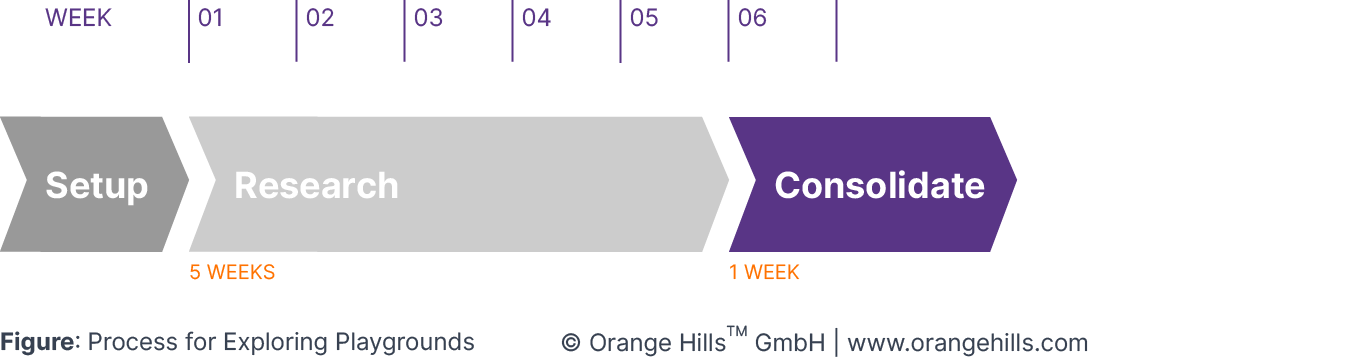
1 week
3. Key Activities
Share insights: In the Consolidation Workshop, the Project Team shares all their findings and insights. Go through every research area.
Analyse findings: The team analyses and consolidates what it brought back — e.g. with an Insights Matrix and its golden nuggets or a Target Groups matrix.
Prepare and present the findings: The team decides how to show the results visually — e.g. a poster of the Target Groups matrix, Customer & User Cards and slides that give an overview of all research activities and most interesting insights — and presents them to the Project Sponsor.
4. Formats
Teamwork on the documentation and the visual preparation of the results
Final presentation of the findings to the Project Sponsor
5. Tools & Materials
All research and interview documentation from Step 2: Research
Project Charter "Exploration" — to check the findings against the research frame you agreed on
Miro Templates "Exploration", if you consolidate in a virtual environment
6. Participants
Project Sponsor (for the presentation of the findings)
7. Q&A
What if the findings don't answer a question from the Project Charter? Say so, plainly. An open question that you can now formulate precisely is a result too, and far more useful than a confident answer built on thin evidence. Mark the gap in the presentation and decide with your Project Sponsor whether it is worth another round of research or whether the project moves on without that answer.
What if the results already contain concrete business ideas? That happens often, and it is a good sign. Don't lose them: document each one in an Idea Charter and add them to the Portfolio. Keep them separate from the research findings in the presentation, so nobody mistakes an idea for an insight.
How detailed does the documentation need to be? Detailed enough that someone who was not part of the team still understands it in six months. That means original quotes rather than summaries, and named sources rather than "the market". The team will be asked about these results long after the exploration has ended.