
Review Workshop
The review workshop is the midterm review of the exploration. The team shares the findings from their first research activities, reflects on their progress, and fine-tunes their research approach.
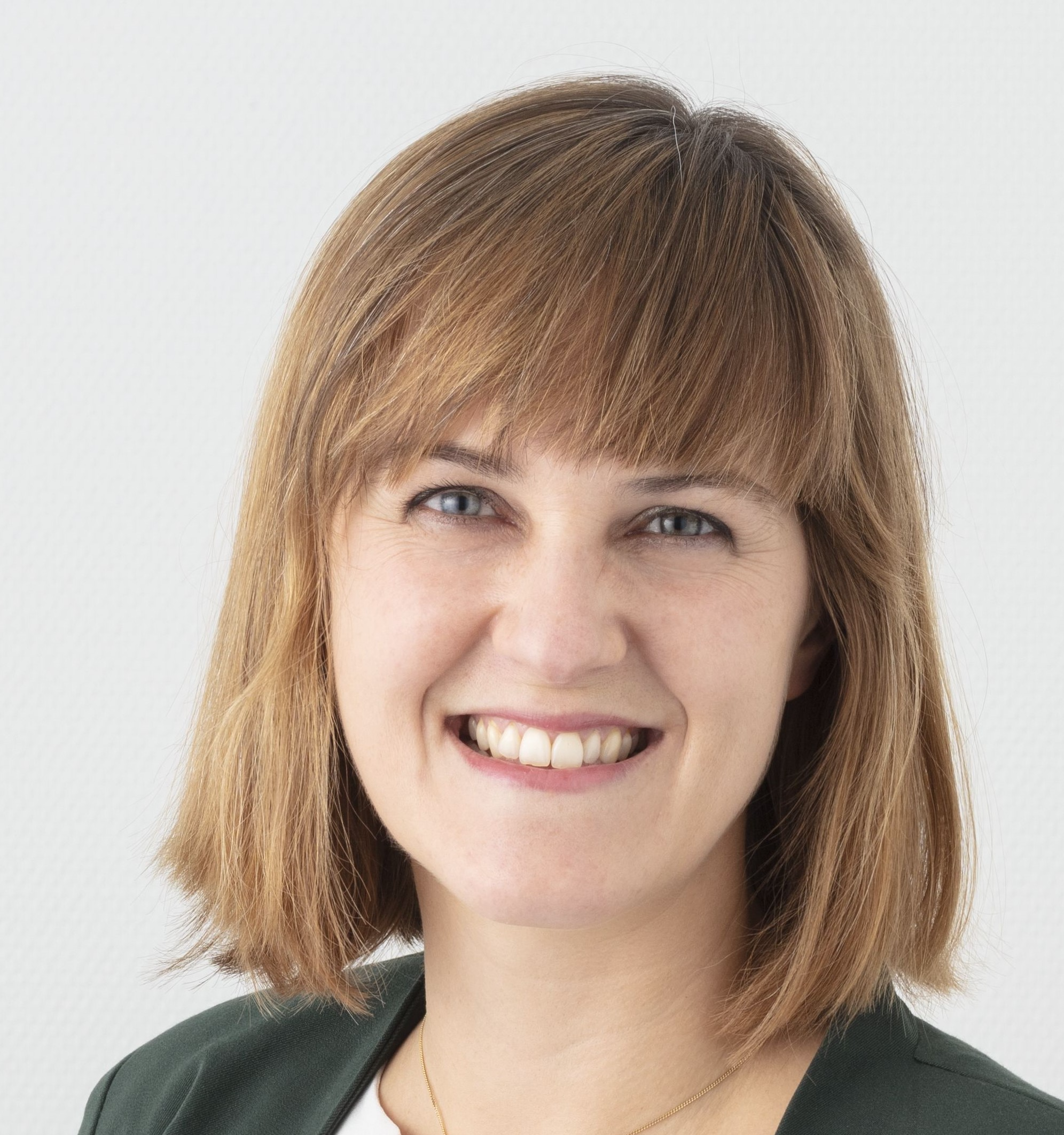
Gabriele Bacher
Team Coach
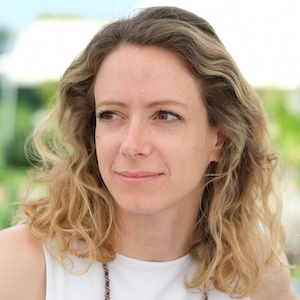
Sabine Schoen
Team Coach
Content
1. Purpose
During the first two weeks of the exploration, the team completes its first research activities and documents them as it goes. What those activities are depends on the playground: interviews with customers, users or experts, observations, DIY activities with competing products, desk research on market data and trends, a first look at internal data. Depending on how experienced the Team Members are, they will have learned a great deal about the methods along the way.
These first two weeks are usually motivating. Teams running interviews are surprised at how open their interviewees are, and how willing to share what they do. Teams doing desk research often stumble across a figure or a competitor's move that nobody in the company had on their radar. Either way, it whets the appetite for the research still to come.
In the review workshop, the team presents its preliminary results to each other. You identify and discuss the first findings together, across all selected research areas: what belongs together, where results contradict each other, and what is actually relevant for the playground. Then take a first shot at structuring what you have. If customer research is your focus, please find more details about how to analyse customer interviews in our article about Exploring Customers. If the exploration is aimed at market and competition, go through the articles Exploring Competitors and Exploring Markets for analysis examples.
Then reflect together on the approach so far and adjust it — the choice of interview partners or sources for the second half of the research, for example, or the interview guideline.
Keep in mind
Helpful questions for reflecting on the approach so far:
Are we looking in the right places — the right companies, sources and data?
Are we talking to the right people?
Are we asking the right questions? And are we asking them the right way?
What further information matters?
Where should we dig deeper?
Are we still inside the focus and scope we agreed on?
How are we progressing?
2. Duration
1 full day, plus preparation and documentation
3. Participants
4. Preparation
As a Team Member
The workshop only works if everyone brings their findings in a form the others can follow. Here's how to prepare:
Tasks
Document every research activity you have completed so far, and highlight the most concise and important quotes and findings as you go.
Save all documents in the agreed location so that everyone involved can access them.
Know your findings well enough to present them vividly and concisely. Reading aloud is not an option!
Prepare a (digital) poster, a slide or a structured documentation of an interview to present it (10 mins.) within the workshop.
Update the overview of your tasks, potential interview partners, experts and sources with the current status and any new candidates in your common digital workspace.
As a Team Coach
Inexperienced teams need feedback after their first research activities and their first documentation. Even if you explained beforehand what good documentation looks like, go through what they produced and point out what to improve — in the documentation itself as well as in the way they gather their material. Ask each Team Member to prepare a (digital) poster or slide to present a summary of the activities or a structured documentation of every interview conducted in the first interaction within the workshop.
Keep in mind
When you review the current status and documentation of their research activities to prepare for the review workshop, you could ask yourself questions like:
Is the team on track regarding arranging customer interviews / expert talks / employee interviews?
Was a specific situation from the past walked through step by step (e.g. customer journey or a certain workflow with a colleague) in qualitative interviews? Or were general processes explained, with a lack of detail?
Did the interviewer ask open questions? Listen to the original audio file or transcript as well.
Are the qualitative interviews documented with direct quotations?
Did the team get access to the selected data — and how good was its quality?
Can every figure be traced back to a source, with its reference year?
Is it clear what is a finding and what is the team member's interpretation of it?
If they are having a hard time reaching people or getting hold of information, think about additional routes to discuss it with the team in the workshop. Keep an eye on the Project Charter "Exploration". Does the current approach still fit the agreed research frame, and is the team still working inside the agreed scope? A deep-dive that has quietly spread into three research areas gets corrected here, halfway through, not at the end. Is there anything else to clarify or fine-tune? If so, the review workshop is the right date to do so.
5. Tools & Materials
1x "moderation wall" with purpose and agenda
1x (Digital) poster / slide / structured documentation of interviews per Team Member
Optional: If customer research is your focus: printed and cut-out pictures of the interviewees, roughly 5 cm in size, plus company logos for B2B, 1x Target Groups template — the one you worked with in the Kick-off Workshop
Optional: If market and competition are your focus: 1x Competitive Landscape template
1x "You are now leaving your comfort zone" carpet
1x Project Charter "Exploration" from the project workspace
2x pin boards and moderation kit
1x flip chart with paper
Common digital workspace, e.g. Miro Templates "Exploration"
Optional: Business Design Guiding Principles as magnetic shapes or stickers
Optional: 1x Anti-Bullsh*t Spray
Optional: customer's glasses
6. Documentation
The Project Charter "Exploration" is up to date in the project workspace.
The list of interviewees, experts and sources is uploaded to the project workspace.
Where you run interviews: the interview guideline and the documentation template are ready to use in the project workspace. When you adjust the guideline, save the updated version of both.
All research documentation sits in the project workspace, in the respective folders.
7. Q & A
What if the team has barely got any research done by the time of the review workshop? The workshop needs enough material to find patterns in. As a rule of thumb, that means at least six interviews for interview-based research, or at least one documented result per research question for desk research. If you are below that, postpone the workshop by a week. Discuss with the team what has kept them from doing the research, and take measures against it.
What if the team doesn't identify enough potential customers and non-customers to interview? Define the selection criteria together, and go for the widest possible range within the research frame. Consult the sales department and ask them to put you in touch. After each interview, ask for further interesting people to talk to — that creates a snowball effect. Bear in mind you won't get an appointment with everyone in the six weeks available, so keep more candidates on your list than you intend to interview.
What if the results from the different research areas don't fit together? Good — that is exactly what this workshop is for. A contradiction between what customers say and what the market data shows is a lead, not a problem. Write it down as an open question and let the second half of the research settle it.
What if Team Members say they are too busy to work on their tasks? Availability should have been settled before the workshop, while you were preparing the Project Charter "Exploration". Schedule one-to-ones and go through their calendars for the next two weeks. There are always activities that can be postponed or dropped.
8. Room & Infrastructure
1x empty wall, more than 420 x 200 cm
1x empty wall, more than 220 x 90 cm
Chairs or cube seats
1x short-throw projector for the project workspace
1x table for catering
Hot and cold drinks, snacks or finger food
9. Example Agenda
Keep in mind
Sometimes the review workshop has to take place in a virtual environment, which changes the agenda. Check out our Miro Templates "Exploration" to facilitate it online.
Time | Activities | Format* | Stakeholders |
09:00 - 09:30 | Check-in and status of the first iteration | B | All |
09:30 - 10:30 | Present the research findings (10 min. each, plus 5 min. discussion) | P | All |
10:30 - 10:45 | Coffee break | B | All |
10:45 - 12:00 | Continue: present the research findings | P | All |
12:00 - 13:00 | Lunch break | B | All |
13:00 - 14:30 | Structure the results: e.g. first segmentation attempts in the Target Groups matrix for customer research, or a first positioning in the Competitive Landscape analysis | T | All |
14:30 - 14:45 | Coffee break | B | All |
14:45 - 15:30 | Reflect on the approach so far and adjust it | T | All |
15:30 - 16:00 | Task management for the second iteration | D | |
16:00 - 16:30 | Wrap-up and farewell | D |
* P = Presentation | D = Discussion | B = Break | T = Teamwork